Showing posts with label aqua. Show all posts

Tuesday, 6 September 2022

DESKTOP 3320 - WOLLONGONG, AUSTRALIA

The seaside city of Wollongong,  located in the Illawarra region of New South Wales, Australia, lies on the narrow coastal strip between the Illawarra Escarpment and the Pacific Ocean, 82 kilometres south of Sydney. Wollongong’s Statistical District has a population of about 300,000, making Wollongong the third largest city in New South Wales after Sydney and Newcastle, and the ninth largest city in Australia.
 
The Wollongong metropolitan area extends from Helensburgh in the north to Shellharbour in the south. It sits within the Wollongong Statistical District, which covers the local authority areas of Wollongong, Shellharbour and Kiama, extending from the town of Helensburgh in the north to Gerroa in the south. Geologically, the city is located in the south-eastern part of the Sydney basin, which extends from Newcastle to Nowra.
 
Wollongong is noted for its heavy industry and its port activity, having a long history of coalmining and manufacturing. The quality of its physical setting is unique, occupying a narrow coastal plain between an almost continuous chain of surf beaches and the cliffline of the rainforest-covered Illawarra escarpment. It has two cathedrals, churches of many denominations and the Nan Tien Temple, one of the largest Buddhist temples in the southern hemisphere.
 
The city attracts many tourists each year, and is a regional centre for the South Coast fishing industry. The University of Wollongong has around 24,000 students and is internationally recognised. Although other explanations have been offered, such as “great feast of fish”, “hard ground near water”, “song of the sea”, “sound of the waves”, “many snakes” and “five islands”, the name Wollongong is believed to mean “seas of the South” in the local Aboriginal language, referring to NSW's Southern Coast.

This post is part of the Travel Tuesday meme,
and also part of the Ruby Tuesday meme

Monday, 1 August 2022

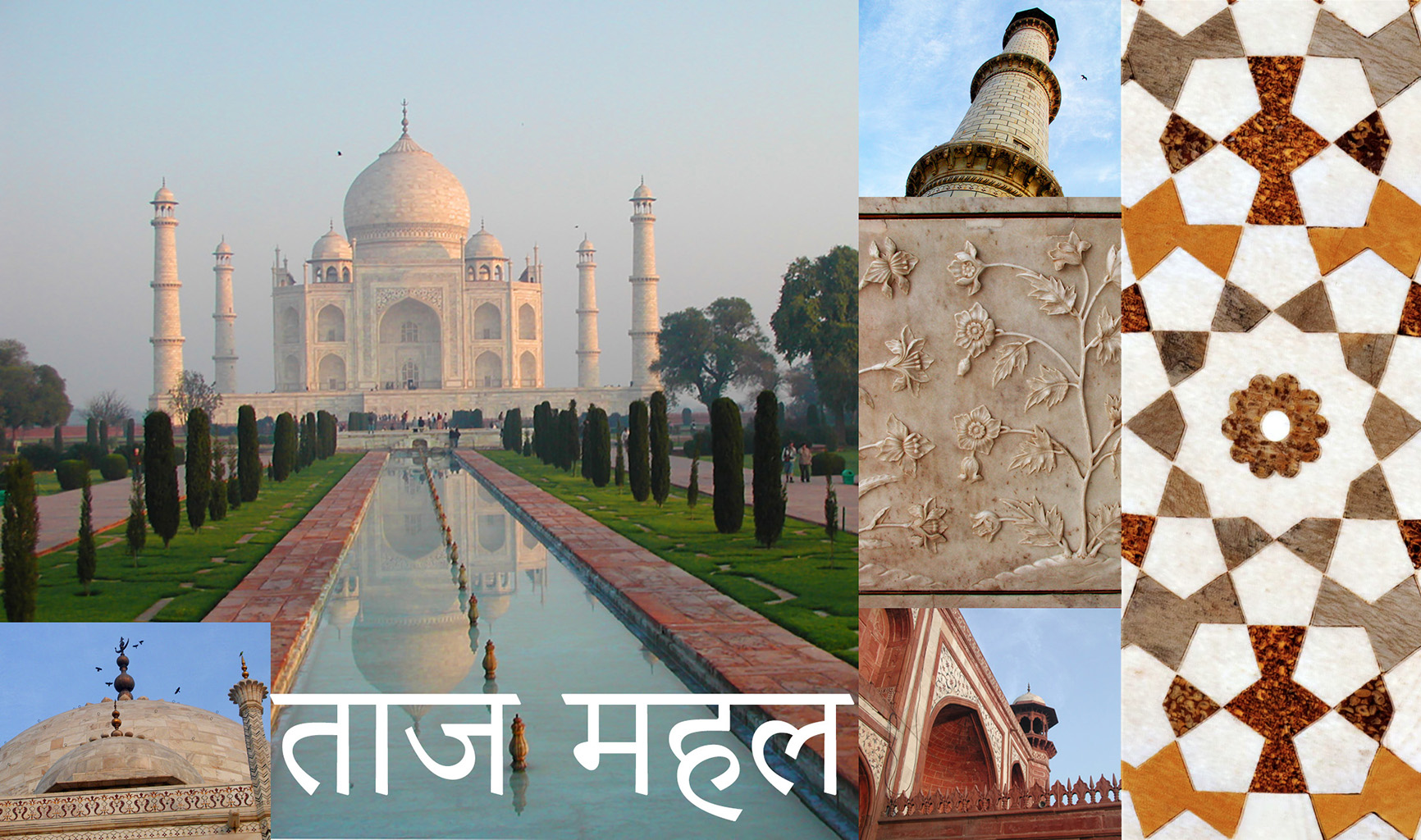
DESKTOP 3284 - TAJ MAHAL

The Taj Mahal is a white Marble mausoleum located in Agra, India. It was built by Mughal emperor Shah Jahan in memory of his third wife, Mumtaz Mahal. The Taj Mahal is widely recognised as the jewel of Muslim art in India and one of the universally admired masterpieces of the world's heritage. The Taj Mahal is the finest example of Mughal architecture, a style that combines elements from Persian, Turkish and Indian architectural styles.

This post is part of the Mosaic Monday meme,
and also part of the Blue Monday meme,
and also part of the Seasons meme.


Tuesday, 19 July 2022

DESKTOP 3271 - THE TWELVE APOSTLES

The Great Ocean Road is an Australian National Heritage listed 243-kilometre stretch of road along the south-eastern coast of Australia between the Victorian cities of Torquay and Warrnambool. The road was built by returned soldiers between 1919 and 1932, and is the world's largest war memorial; dedicated to casualties of World War I. It is an important tourist attraction in the region, which winds through varying terrain alongside the coast, and provides access to several prominent landmarks; including the nationally significant Twelve Apostles rock formations.

The Twelve Apostles is a collection of miocene limestone rock stacks jutting from the water in Port Campbell National Park, between Princetown and Peterborough on the Great Ocean Road. The Apostles were formed by erosion: The harsh weather conditions from the Southern Ocean gradually eroded the soft limestone to form caves in the cliffs, which then became arches, which in turn collapsed; leaving rock stacks up to 45 metres high. The site was known as the Sow and Piglets until 1922 (Muttonbird Island, near Loch Ard Gorge, was the Sow, and the smaller rock stacks the Piglets); after which it was renamed to The Apostles for tourism purposes. The formation eventually became known as the Twelve Apostles, despite only ever having nine stacks.

This post is part of the Travel Tuesday meme
and also part of the Ruby Tuesday meme


Monday, 23 May 2022

DESKTOP 3216 - MOSAIC

A tile mosaic by the banks of the Yarra River in Melbourne.

This post is part of the Mosaic Monday meme,
and also part of the Blue Monday meme,
and also part of the Seasons meme.


Sunday, 1 May 2022

Wednesday, 13 April 2022

DESKTOP 3176 - WERRIBEE RIVER

The Werribee River is a perennial river of the Port Phillip catchment that is located on the plain West of Melbourne, Victoria, Australia. The headwaters of a tributary, the Lerderderg River, are north of Ballan near Daylesford and it flows across the basalt plain, through the suburb of Werribee to enter Port Phillip. A linear park follows the Werribee River along much of its course. In total the Werribee River completes a journey of approximately 110 kilometres. 

This post is part of the My Corner of the World meme,
and also part of the Nature Notes meme.


Tuesday, 1 March 2022

DESKTOP 3133 - PORT DOUGLAS

Port Douglas is a coastal town and locality in the Shire of Douglas, Queensland,approximately 60 km north of Cairns. In the 2016 census, Port Douglas had a population of 3,504 people. The town's population can often double, however, with the influx of tourists during the peak tourism season from May to September. The town is named in honour of a former Premier of Queensland, John Douglas.

Port Douglas developed quickly based on the mining industry. Other parts of the area were established with timber cutting occurring in the area surrounding the Daintree River and with settlement starting to occur on lots around the Mossman River by 1880. Previous names for the town included Terrigal, Island Point, Port Owen and Salisbury. The town is situated adjacent to two World Heritage areas, the Great Barrier Reef and the Daintree Rainforest.

This post is part of the Blue Monday meme,
and also part of the Travel Tuesday meme,
and also part of the Wordless Wednesday meme.


Tuesday, 25 January 2022

DESKTOP 3098 - INVERLOCH

Inverloch is a seaside town located in Victoria, Australia. It is located 143 kilometres south east of Melbourne via the South Gippsland Highway on the Bass Highway at the mouth of Anderson Inlet, in the Bass Coast Shire of Gippsland, Victoria, Australia. Known originally for the calm waters of Anderson Inlet, it is now also known for the discovery of Australia's first dinosaur bone. At the 2011 census it had a population of 4,960.

Inverloch is a popular tourist destination, particularly for swimming, kitesurfing and windsurfing at the calm waters of Anderson Inlet. Fishing and surfing are also popular. The town was first named Andersons Inlet after Samuel Anderson, the first European to settle here. It was later renamed Inverloch after Loch Inver (Lake Entrance) in Scotland. The town is also home to a tennis club which is home to the some of Australia's greatest players.

This post is part of the Our World Tuesday meme,
and also part of the Blue Monday meme,
and also part of the Travel Tuesday meme,
and also part of the Wordless Wednesday meme.


Wednesday, 1 December 2021

DESKTOP 3044 - BLUFF, NZ

Bluff is a town and seaport in the Southland region, on the southern coast of the South Island of New Zealand. It is the southern-most town in New Zealand (excluding Oban) and, despite Slope Point being further to the south, is colloquially used to refer to the southern extremity of the country (particularly in the phrase "from Cape Reinga to The Bluff"). According to the 2006 census, the usually resident population was 1,850, a decrease of 85 since 2001.

This post is part of the Wordless Wednesday meme,
and also part of the My Corner of the World meme,
and also part of the Nature Notes meme.


Tuesday, 17 August 2021

DESKTOP 2938 - SINGAPORE

Singapore, officially the Republic of Singapore, sometimes referred to as the Lion City, the Garden City or the Little Red Dot, is a sovereign city-state in Southeast Asia. It lies one degree (137 km) north of the equator, at the southern tip of peninsular Malaysia, with Indonesia's Riau Islands to the south. Singapore's territory consists of one main island along with 62 other islets. Since independence, extensive land reclamation has increased its total size by 23% (130 km2), and its greening policy has covered the densely populated island with tropical flora, parks and gardens.

This post is part of the Our World Tuesday meme,
and also part of the Ruby Tuesday meme,
and also part of the Travel Tuesday meme,
and also part of the Wordless Wednesday meme.


Tuesday, 27 July 2021

DESKTOP 2917 - NIUE, OCEANIA

Niue is an island country in the South Pacific Ocean, 2,400 kilometres northeast of New Zealand, east of Tonga, south of Samoa, and west of the Cook Islands. Niue's land area is about 261 square kilometres and its population, predominantly Polynesian, was about 1,600 in 2016.

The island is commonly referred to as "The Rock", which comes from the traditional name “Rock of Polynesia”. Niue is one of the world’s largest coral islands. The terrain consists of steep limestone cliffs along the coast with a central plateau rising to about 60 metres above sea level. A coral reef surrounds the island, with the only major break in the reef being in the central western coast, close to Alofi. A notable feature are the many limestone caves near the coast.

Niue, whose capital is the village of Alofi, is a self-governing state in free association with New Zealand; and New Zealand conducts most diplomatic relations (though not all) on its behalf. Niueans are citizens of New Zealand, and Queen Elizabeth II is head of state in her capacity as Queen of New Zealand. Between 90–95% of Niuean people live in New Zealand, along with about 70% of the speakers of the Niuean language.

This post is part of the Our World Tuesday meme,
and also part of the Blue Monday meme,
and also part of the Travel Tuesday meme,
and also part of the Wordless Wednesday meme.


Tuesday, 15 June 2021

DESKTOP 2875 - GALAXIDI, GREECE

Galaxidi or Galaxeidi (Greek: Γαλαξίδι/Γαλαξείδι), is a town and a former municipality in the southern part of Phocis, Greece. Since the 2011 local government reform it is part of the municipality Delphi, of which it is a municipal unit. The municipal unit has an area of 126.088 km2. Galaxidi has a small harbour on the north coast of the Gulf of Corinth. It is 7 km southwest of Itea, 15 km southwest of Delphi, 17 km south of Amfissa and 48 km east of Naupactus. The Greek National Road 48 connects Galaxidi with Naupactus, Itea and Delphi. Galaxidi is a 2.5 to 3 hour drive from the capital Athens and a relatively popular weekend retreat.
 
Modern Galaxidi is built on the site of ancient Haleion, a city of western Locris. Traces of habitation are discernible since prehistoric times with a peak in the Early Helladic Period (Anemokambi, Pelekaris, Kefalari, islet of Apsifia). A significant Mycenaean settlement has been located at Villa; the hill of St. Athanasios also revealed a fortified Geometric settlement (ca. 700 BC). In the Archaic and Classical periods (7th-4th centuries BC) was developed the administrative and religious centre at the modern site of Agios Vlasis. It seems that in ca. 300 BC the present site was settled and surrounded by a fortification wall; it is the period of the expansion of power of the Aetolian League. Haleion flourished throughout the Hellenistic and Roman periods until the 2nd century AD. 
 
Galaxidi's small port is situated on a natural double harbour surrounded by mountains. The deeper main harbour provides docking facilities for yachts and small fishing boats and is lined with restaurants, bars, and stores. The smaller harbour is Chirolaka. On the rocky shoreline by the side of the larger harbour, is a pine forest planted by school children in the early twentieth century. There is a road behind the town that leads up the mountain to the Monastery of the Metamorphosis (actually a convent that was inhabited by one nun as of 2010). This provides a splendid view of the town and its surroundings. No traces remain of the town's medieval castle. The Church of Saint John of Jerusalem, built by the Hospitallers in 1404, survived until after World War I, when it was replaced by a modern church dedicated to Saint Nicholas.

This post is part of the Our World Tuesday meme,
and also part of the Ruby Tuesday meme,
and also part of the Travel Tuesday meme,
and also part of the Wordless Wednesday meme.

Wednesday, 25 November 2020

DESKTOP 2673 - ALTONA WETLANDS

The Altona Important Bird Area (IBA) comprises several wetland sites on, or close to, the north-western coast of Port Phillip in Victoria, south-eastern Australia. Collectively they total 1223 hectares in area and lie within, or adjacent to, the western suburbs of the city of Melbourne. They were classified as an IBA because they support more than 1% of the world populations of Red-necked Stint, Chestnut Teal and Pacific Gull.

This post is part of the Wordless Wednesday meme,
and also part of the My Corner of the World meme,
and also part of the Nature Notes meme.


Wednesday, 30 September 2020

DESKTOP 2618 - FRASER ISLAND

Fraser Island (K'Gari, Gari) is a heritage-listed island located along the southeastern coast of the state of Queensland, Australia. It is approximately 250 kilometres north of the state capital, Brisbane. Known as Fraser Island, it is a locality within the Fraser Coast local government in the Wide Bay–Burnett region. Together with some satellite islands off the southern west coast and thus in the Great Sandy Strait, Fraser Island forms the County of Fraser, which is subdivided into six parishes. Among the islands are Slain Island, Tooth Island, Roundbush Island, Moonboom Island, Gardner Island, Dream Island, Stewart Island, and the Reef Islands, all part of the southermost parish of Talboor.

Its length is about 120 kilometres and its width is approximately 24 kilometres. It was inscribed as a World Heritage Site in 1992. The island is considered to be the largest sand island in the world at 1,840 km2. It is also Queensland's largest island, Australia's sixth largest island and the largest island on the East Coast of Australia. It was formerly the homeland of the Butchulla tribe. 

The island has rainforests, eucalyptus woodland, mangrove forests, wallum and peat swamps, sand dunes and coastal heaths. It is made up of sand that has been accumulating for approximately 750,000 years on volcanic bedrock that provides a natural catchment for the sediment which is carried on a strong offshore current northwards along the coast. Unlike on many sand dunes, plant life is abundant due to the naturally occurring mycorrhizal fungi present in the sand, which release nutrients in a form that can be absorbed by the plants.

Fraser Island is home to a small number of mammal species, as well as a diverse range of birds, reptiles and amphibians, including the occasional saltwater crocodile. The island is protected in the Great Sandy National Park. Fraser Island has been inhabited by humans for as much as 5,000 years. Explorer James Cook sailed by the island in May 1770. Matthew Flinders landed near the most northern point of the island in 1802. For a short period the island was known as Great Sandy Island. The island became known as Fraser due to the stories of a shipwreck survivor named Eliza Fraser. Today the island is a popular tourism destination. Its resident human population was 194 at the 2011 Australian Census.

This post is part of the Wordless Wednesday meme,
and also part of the My Corner of the World meme,
and also part of the Nature Notes meme.


Tuesday, 30 June 2020

DESKTOP 2525 - MT BROMO, JAVA

Mount Bromo (Indonesian: Gunung Bromo), is an active volcano and part of the Tengger massif, in East Java, Indonesia. At 2,329 meters (7,641 ft) it is not the highest peak of the massif, but is the best known. The massif area is one of the most visited tourist attractions in East Java, Indonesia. The volcano belongs to the Bromo Tengger Semeru National Park. 

The name of Bromo derived from Javanese pronunciation of Brahma, the Hindu creator god. Mount Bromo sits in the middle of a plain called the "Sea of Sand" (Javanese: Segara Wedi or Indonesian: Lautan Pasir), a protected nature reserve since 1919. The typical way to visit Mount Bromo is from the nearby mountain village of Cemoro Lawang. From there it is possible to walk to the volcano in about 45 minutes, but it is also possible to take an organised jeep tour, which includes a stop at the viewpoint on Mount Penanjakan (2,770 m or 9,088 ft) (Indonesian: Gunung Penanjakan). The viewpoint on Mount Penanjakan can also be reached on foot in about two hours.

Depending on the degree of volcanic activity, the Indonesian Centre for Volcanology and Disaster Hazard Mitigation sometimes issues warnings against visiting Mount Bromo.

This post is part of the Our World Tuesday meme,
and also part of the Travel Tuesday meme,
and also part of the Wordless Wednesday meme.